“Let’s talk about your parents,” Dr. Rosen suggests.
Dr. Rosen loves to bring up parents. I do not. And this is the debate Dr. Rosen and I engage in constantly.
“I love my parents. They are not why I am sad or why I do any of the things I do,” I tell him.
His eyes light up, ready to prove this wrong, and I groan internally.
“Why do you say that?” he asks.
“I have never wanted to blame my parents for anything. All they have done is love me, and love is imperfect no matter what, but it’s always what matters.”
I have tried to explain this to Dr. Rosen before, and I think I have disturbed something deep within his soul. I want to ask him about his own parents, but is that insubordination when you are the patient?
“When you say that love is imperfect, what do you mean?” he asks, resting his hands on his pot belly, his eyes observing me through his black-rimmed glasses.
Psychiatrists have a certain way of looking at people. They are noticing everything. He’s watching my body language, my hands, whether or not one of my feet wiggles back and forth. Everything I do is a clue, a piece of a puzzle.
But I am not here to impress Dr. Rosen. I am here to present myself in complete authenticity, so I do not perform. Also, I am watching him just as closely, piecing him together, and I think he knows this.
“Love will always be imperfect because we will always be imperfect,” I tell him. “Perfection is not the point of any of it. The point is to love anyway,” I say sadly.
He is quiet, and for a moment I think I have stumped him.
“Go on,” he says. This is his favorite thing to say to me.
I pause to think for a moment. I do not know if I’m doing anything physically that’s revealing some sort of disorder, but I’m sure Dr. Rosen does.
“I love my mom and dad. But they are the main characters in their own story that I happen to be a part of,” I say.
I can tell Dr. Rosen is ready to dish out the N-word: narcissist.
“We all are, though, are we not?” I continue.
Dr. Rosen looks like, Ugh, this bitch.
I carry on before he can interject.
“Um, like, okay, as a woman, you have a very specific relationship with your body. Society almost forces you to. My mom is bashful. She is a little bit uncomfortable in her own skin, and sure, I grew up being a little unsure of how to be comfortable in my own skin because I was modeling my mom, because she’s my hero and I want to be like her. But I’m growing up in an entirely different world than she did. To blame her for some sort of insecurity we share is both pointless and useless. I have to be self aware and overcome things on my own, not sit around blaming others, it’s not their fault. We all have to take accountability for ourselves. I’m learning how to be proud of my body in maybe a way my mom never got to — a way that I’m showing her how to now.”
Dr. Rosen is quiet, so I keep rambling.
“My mom never had a roommate or lived alone. She married my dad, and that was it. So yeah, when I told her I wanted to go to college in San Francisco and came home for Thanksgiving bursting with excitement over my new friends, a lot of whom were gay, she was uncomfortable because that was foreign to her. We fought about it. She didn’t have the experience, so she was scared.
“The same with my moving to Hollywood, Hawaii alone, me having a million boyfriends. How was she going to protect me when she herself was taught something different or was scared?
“But with my friends who were gay, when I brought them over for dinner during spring break and she met them, she fell in love with them too. She wasn’t scared anymore because she understood; she had the firsthand experience. And it’s not lost on me that that’s actually her love for me. I recognize that. It changed my life, and also hers.
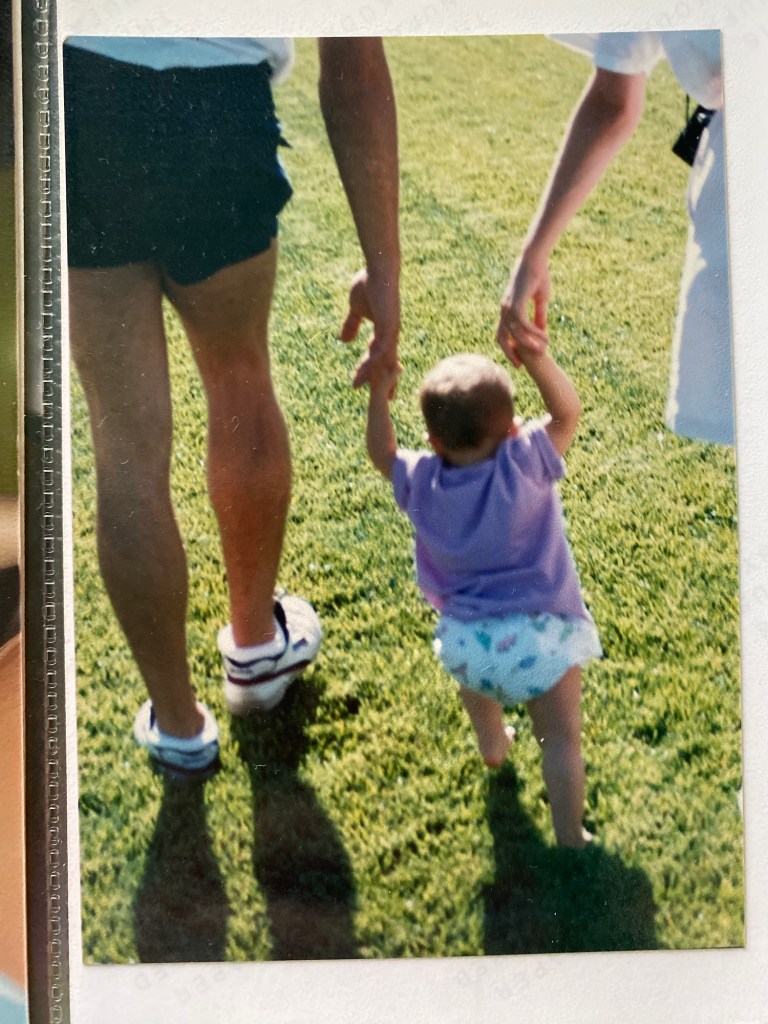
“That’s the beauty of parents and children. I think that’s the way God wanted it. Your parents are your first lesson in love.”
Dr. Rosen is frozen. He may have been holding his breath through my whole speech, and he looks suspended in a state of fog.
“Go on,” he says. “What do you mean that’s the way God wanted it?”
“Your parents teach you. It begins that way. But there comes a point where they can’t control their kids anymore, and that’s where the love has to come in.
“And it doesn’t have to be your kids. It can just be the younger generations- people who grew up and who are growing up in different worlds. That’s the point: to listen to one another, be open to what we don’t understand. That’s the way we send more love into the world, how we keep it going. How we progress forward. We learn from one another.
“But if we are speaking specifically about parents, I know I’m speaking from privilege. My parents have always taken a step back and then a step forward with an open heart because they love me and my brother. That love they have for us makes them brave. That has shown me that love rises above fear.”
I know Dr. Rosen is bummed about this. He wants someone to be an alcoholic or abusive. He wants my mother to be some villain that I have to overcome. But she’s not. I love her endlessly. It’s okay that she is who she is. And it’s okay that I am turning out to be who I am. It’s okay because of love.
“What about your dad?” Dr. Rosen asks, his face hoping maybe my dad is the issue.
“My dad is the most unjudgmental human being I’ve ever met. And if someone were to ask me who knows me the best, I would name him.”
Dr. Rosen looks disappointed.
“I have fought with my parents. I have done things that I know have driven them absolutely insane, maybe even disappointed them, made them question things. But my wins in life, I owe to them.”
Dr. Rosen is quiet, and I can’t sit in the silence waiting for a “Go on…” so I keep going.
“People have a hard time loving what they fear,” I state this and then pause in haughtiness, feeling like Barack Obama or Pope Leo XIV.
“But they shouldn’t. And my parents have taught me that. I have challenged them over and over again, and they have risen to the occasion every single time. Whatever fight occurred, whatever misunderstanding, whatever judgment got in the way, love always, always won.”
Dr. Rosen looks like this was a wash. But he’s still getting paid, so oh well.
“What brought you here?” he asks, almost quietly.
I have to think about this because it’s been confusing for me too.
“I think I’m sad that the world can’t see that. I don’t understand why love isn’t winning,” I say.
 Word Vomit
Leave a comment